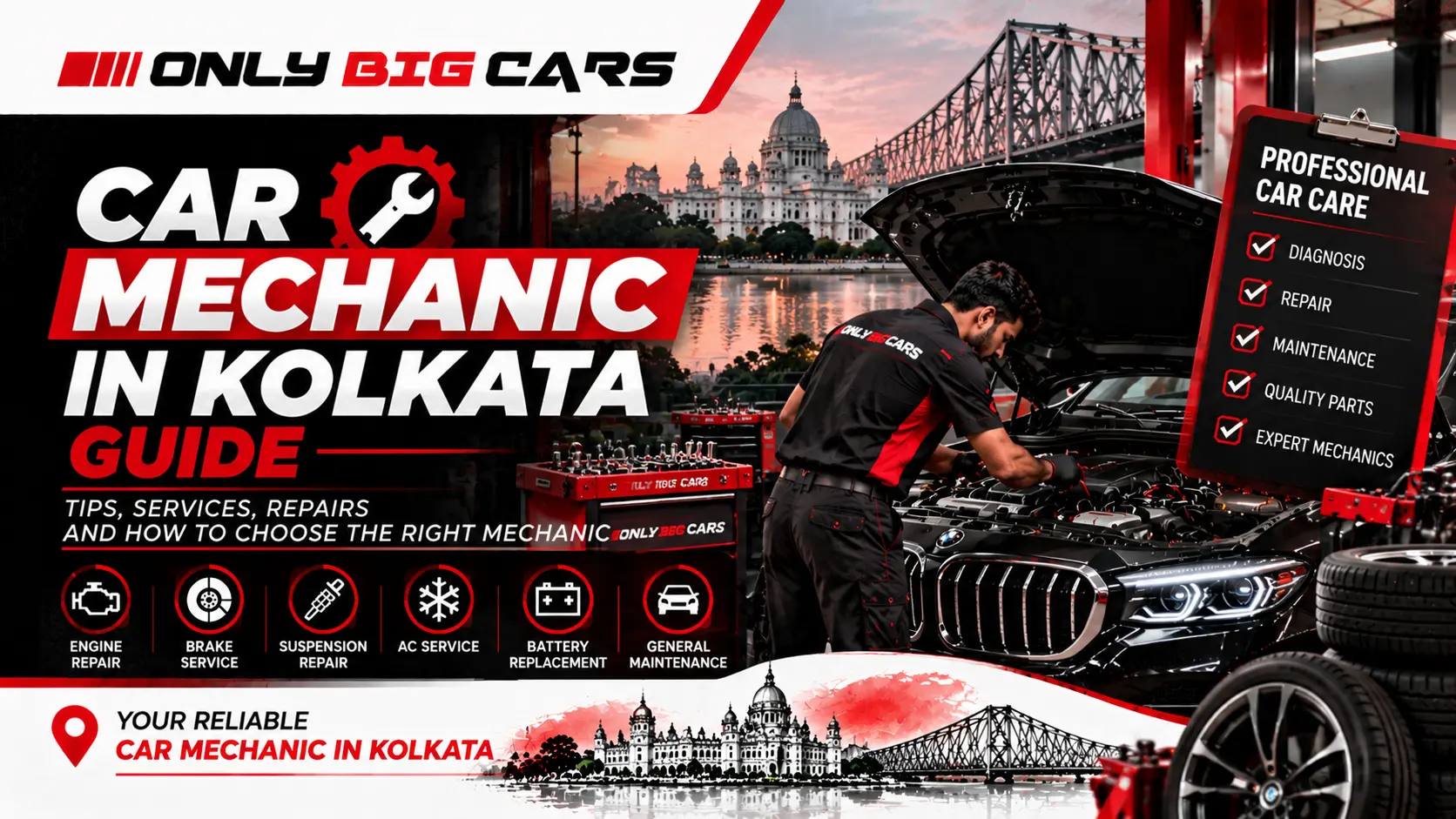
Car Mechanic in Kolkata Guide
A good car mechanic does more than replace parts and fix visible problems. The right mechanic first understands what your car is experiencing, identifies the possible cause, explains the repair requirement and then recommends the appropriate solution.
For car owners in Kolkata, finding a dependable Car mechanic can become especially important when a vehicle starts showing unusual sounds, warning lights, performance changes or recurring problems.
Whether you drive a regular family car, a premium vehicle or a luxury model, choosing the right professional can make the repair process more predictable and easier to manage.
At onlybigcars, the focus is on understanding the vehicle's actual requirement rather than treating every problem with the same repair approach.
What Does a Good Car Mechanic Actually Do?
A professional mechanic's job is not limited to mechanical repairs.
A proper inspection may involve:
- Understanding the driver's complaint
- Checking the vehicle's overall condition
- Inspecting relevant mechanical components
- Using suitable diagnostic equipment when required
- Identifying the likely source of the problem
- Explaining repair options
- Recommending necessary maintenance
- Checking the vehicle after the repair
This diagnosis-first approach can help prevent unnecessary part replacement and allows the vehicle owner to understand what is actually being repaired.
Don't Choose a Mechanic Only Because It Is Nearby
Searching for a Car mechanic is a convenient starting point, but distance should not be the only deciding factor.
Before choosing a mechanic, consider:
1. Experience With Your Type of Car
Different vehicles can have different mechanical and electronic systems. A mechanic who regularly works on your type of vehicle may understand its common service requirements better.
For premium and luxury vehicles, relevant experience becomes even more important.
2. Diagnostic Capability
Modern cars rely heavily on electronic control systems.
If the dashboard displays a warning light or the vehicle develops an electronic issue, visual inspection alone may not always identify the underlying problem.
A suitable diagnostic process can help narrow down the possible fault before repair work begins.
3. Clear Communication
A good mechanic should be able to explain:
- What was inspected
- What problem was identified
- Which repair is necessary
- Which work can wait
- What parts may be required
- What maintenance should be considered
Clear communication makes it easier for the owner to make an informed decision.
When Should You Search for a Car Mechanic?
You do not always need to wait until the vehicle completely breaks down.
Consider getting your car inspected when you notice:
- Unusual engine sounds
- Difficulty starting
- Warning lights
- Reduced performance
- Unusual vibrations
- Brake-related changes
- Steering problems
- Suspension noise
- Electrical problems
- Fluid leakage
- Poor AC performance
- Unusual fuel consumption
A small change in vehicle behaviour can sometimes be an early indication that a component needs attention.
Car Repair Is Not Always About Replacing Parts
One of the biggest misconceptions about vehicle repair is that every problem requires immediate part replacement.
A proper repair process should begin with diagnosis.
For example, if a vehicle experiences an engine related problem, the mechanic may need to examine several possible causes before recommending a repair.
The same principle applies to electrical, braking, suspension and transmission-related concerns.
This is why choosing a professional Car repair service is more useful than simply looking for the cheapest repair option.
How a Mechanic Should Approach a Repair
A professional repair process can generally follow a simple sequence.
Step 1: Understand the Complaint
The owner explains when the problem occurs, what the vehicle feels or sounds like and whether the issue happens continuously or occasionally.
Step 2: Inspect the Vehicle
The mechanic checks the relevant systems and components based on the complaint.
Step 3: Diagnose the Cause
Where necessary, diagnostic equipment or additional testing can be used.
Step 4: Explain the Repair
The mechanic should explain the identified issue and the recommended repair.
Step 5: Carry Out the Work
Once the repair is approved, the required work can be performed using suitable procedures and parts.
Step 6: Test the Vehicle
The vehicle should be checked after the repair to confirm that the original complaint has been addressed as expected.
This approach is one reason why a professional Car workshop can be more valuable than a workshop that focuses only on quick part replacement.
Luxury Cars Need a More Careful Approach
Luxury vehicles can include sophisticated mechanical, electrical and electronic systems.
Owners searching for a Luxury car mechanic should therefore look beyond general availability.
Important factors include:
- Experience with premium vehicles
- Appropriate diagnostic equipment
- Understanding of electronic systems
- Correct maintenance procedures
- Suitable replacement parts
- Attention to manufacturer recommended service requirements
- Detailed inspection before major repairs
A luxury vehicle should not automatically receive a different solution for every issue, but its systems may require more specialized knowledge and equipment.
BMW, Mercedes and Audi Owners Should Consider Specialist Experience
Owners of German luxury cars may specifically search for terms such as BMW specialist mechanic, Mercedes specialist mechanic or Audi specialist mechanic.
The important point is not simply the label "specialist."
Ask whether the mechanic actually has experience with the relevant vehicle and whether the workshop has suitable diagnostic and repair capabilities.
A mechanic familiar with a particular brand's systems may be better positioned to understand its maintenance requirements and common diagnostic processes.
What About Engine Problems?
Engine related problems should not be ignored.
Issues such as unusual noises, rough running, starting difficulties, overheating or noticeable performance changes deserve proper inspection.
An Engine repair workshop may be useful when the problem requires more detailed mechanical diagnosis.
However, an engine symptom does not automatically mean that the engine needs major repair.
The cause should be identified first.
Electrical Problems Need the Same Diagnosis First Approach
Modern vehicles contain numerous electrical and electronic systems.
Problems can involve:
- Battery related components
- Charging systems
- Sensors
- Lighting
- Starting systems
- Control modules
- Wiring
- Electronic accessories
If you are looking for a Car electrical repair, choose a professional who can inspect and diagnose the electrical system rather than replacing components without identifying the actual fault.
What Should You Ask Before Approving a Repair?
Before giving approval, ask a few straightforward questions:
What is the actual problem?
Understanding the issue helps you make an informed decision.
How was the problem diagnosed?
This tells you whether the recommendation is based on inspection or assumption.
Is the repair urgent?
Some repairs require immediate attention while others may be planned.
Which parts need replacement?
Ask which components are affected and why replacement is necessary.
Are there any additional issues?
A complete inspection may identify other maintenance requirements.
What should be checked after the repair?
This helps you understand the final verification process.
Why a Transparent Estimate Matters
A repair estimate should make the expected work easier to understand.
Depending on the job, it may include:
- Labour
- Parts
- Consumables
- Diagnostic charges, where applicable
- Additional recommended work
The final cost can sometimes change if inspection reveals another issue. A professional workshop should communicate such changes before proceeding with additional work whenever possible.
Routine Maintenance Still Matters
A mechanic is not only useful when something goes wrong.
Regular maintenance can help monitor important vehicle systems and identify wear before it develops into a more complicated problem.
Depending on the vehicle, maintenance can include checks related to:
- Engine oil
- Filters
- Brakes
- Tyres
- Battery
- Cooling system
- Suspension
- Steering
- AC system
- Electrical components
Regular inspection also gives the mechanic an opportunity to identify issues that may not yet be obvious to the driver.
Choosing OnlyBigCars for Professional Car Care
At OnlyBigCars, the approach is centered around understanding the vehicle's requirement before recommending the next step.
Whether the requirement involves routine maintenance, diagnostics, mechanical repair or premium vehicle care, the objective is to follow a structured service process rather than treating every vehicle problem in the same way.
For owners looking for a Premium car repair, the important factors should always include proper diagnosis, relevant experience, suitable equipment, clear communication and attention to the vehicle's individual requirements.
A Simple Checklist Before Choosing Your Mechanic
Before booking your next service or repair, use this quick checklist:
- Does the mechanic understand your vehicle type?
- Can the workshop diagnose electronic issues when required?
- Is the repair explained clearly?
- Are estimates communicated before additional work?
- Does the workshop have suitable tools and equipment?
- Are recommended repairs based on inspection?
- Is the vehicle checked after the repair?
- Can the workshop handle both routine maintenance and more complex requirements?
If the answer to most of these questions is yes, you are likely looking at a more professional approach to vehicle care.
Conclusion
Finding a reliable car mechanic in Kolkata should not simply be about finding the closest workshop or the lowest repair price.
The better approach is to look for someone who understands the vehicle, diagnoses the problem properly, communicates clearly and recommends repairs based on actual requirements.
From everyday maintenance to luxury vehicle diagnostics and mechanical repairs, the right professional approach can make car ownership easier and more predictable.
With OnlyBigCars, car owners can explore professional automotive care focused on inspection, diagnosis, maintenance and repair requirements.
FAQs
1. How do I find a good car mechanic in Kolkata?
Look for relevant experience, proper diagnostic capability, transparent communication, suitable equipment and a clear repair process.
2. When should I visit a car mechanic?
Visit a mechanic when you notice warning lights, unusual sounds, vibrations, starting problems, performance changes, fluid leaks or other unusual vehicle behaviour.
3. Do luxury cars need a specialist mechanic?
Luxury cars can benefit from mechanics who understand their advanced mechanical and electronic systems and have appropriate diagnostic equipment.
4. How do I choose a mechanic for a BMW, Mercedes or Audi?
Look for relevant brand experience, suitable diagnostic capability and a clear understanding of the vehicle's maintenance and repair requirements.
5. Should I repair my car immediately if a warning light appears?
A warning light should not be ignored. The appropriate next step depends on the warning and the vehicle's behaviour, so professional inspection can help determine the cause.
6. Why is diagnosis important before car repair?
Diagnosis helps identify the likely cause of a problem before repair work begins, reducing the risk of unnecessary part replacement and incorrect repairs.