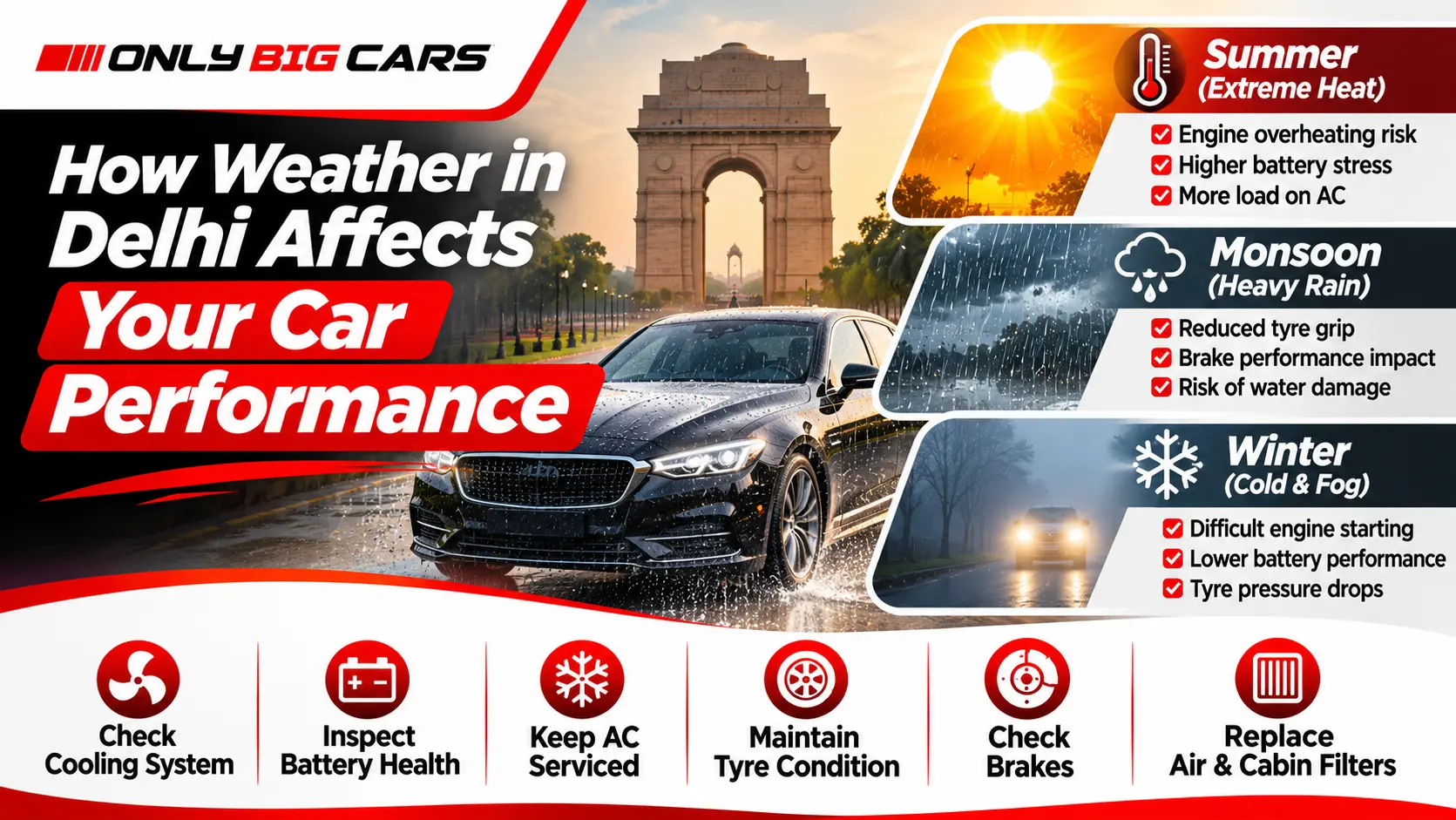
Delhi experiences significant weather changes throughout the year. From extremely hot summers and heavy monsoon rainfall to cold winter mornings and dusty conditions, these seasonal changes can affect how your car performs.
Many car owners notice changes in their vehicle during different seasons. The engine may take longer to start on cold mornings, the air conditioner may struggle during extreme heat, or the brakes and tyres may require additional attention during the rainy season.
These changes are not always signs of a serious mechanical problem. However, weather conditions can put additional stress on different vehicle components and make regular maintenance especially important.
Understanding how weather affects your vehicle can help you identify potential issues early, plan seasonal inspections and avoid unnecessary repair expenses.
In this guide, onlybigcars explains how Delhi's summer, monsoon and winter conditions affect car performance and what maintenance steps can help keep your vehicle in good condition throughout the year.
1. How Delhi's Summer Heat Affects Your Car
Summer in Delhi can bring extremely high temperatures. When a car is regularly exposed to heat, several components may experience additional stress.
The cooling system, battery, tyres, air conditioning and engine oil all deserve attention during this season.
Engine Cooling System Works Under Greater Stress
The engine generates heat during operation, and the cooling system helps maintain its operating temperature.
During hot weather, the cooling system may need to manage additional heat from the surrounding environment.
Potential problems include:
- Low coolant levels.
- Coolant leakage.
- Damaged hoses.
- Radiator blockages.
- Cooling fan problems.
- Thermostat-related faults.
If the engine temperature rises above its normal operating range, it should not be ignored.
Check coolant levels according to the manufacturer's instructions and have any suspected leakage or overheating investigated.
Never open a hot coolant reservoir or radiator cap. Allow the engine to cool before any inspection that requires access to the cooling system.
Car Battery May Experience Heat Related Stress
Extreme temperatures can affect battery performance and shorten battery life.
A car battery already weakened by age or previous electrical problems may become more noticeable during periods of intense heat.
Signs that deserve attention include:
- Slow engine cranking.
- Difficulty starting the vehicle.
- Battery warning indicators.
- Electrical accessories behaving inconsistently.
- Repeated battery discharge.
A battery inspection can help assess its condition and charging system performance.
If your vehicle shows repeated starting problems, consider a professional battery check rather than assuming that the battery needs immediate replacement.
Air Conditioning Has to Work Harder
A car's air conditioning system may run for longer periods during Delhi's summer.
This can make existing AC problems more noticeable, especially when the cabin takes longer to cool.
Possible reasons include:
- Dirty cabin air filters.
- Condenser airflow restrictions.
- Refrigerant leakage.
- Compressor-related problems.
- Cooling fan faults.
- Electrical issues.
If the AC is not cooling properly, a proper inspection can identify the cause.
Regular car AC service can help maintain system performance and identify problems before they become more expensive to repair.
Tyres Need Regular Inspection
High road temperatures can increase tyre temperature during driving.
Incorrect tyre pressure, excessive loads and existing tyre damage can increase the risk of tyre-related problems.
During summer, pay attention to:
- Correct tyre pressure.
- Cuts and visible damage.
- Uneven tread wear.
- Sidewall cracks or bulges.
- Tyre age and condition.
Check tyre pressure when the tyres are cold and follow the manufacturer's recommended pressure values.
2. How Delhi's Monsoon Weather Affects Your Car
Monsoon rainfall changes road conditions and creates additional challenges for drivers.
Waterlogged roads, wet surfaces, reduced visibility and accumulated dirt can affect several vehicle systems.
Wet Roads Can Reduce Tyre Grip
Tyres are responsible for maintaining contact with the road.
During rainfall, water between the tyre and road surface can reduce grip, particularly when tyres are worn or the vehicle is travelling too fast for the conditions.
Check:
- Tread depth.
- Uneven tyre wear.
- Tyre pressure.
- Visible tyre damage.
- Alignment concerns.
Avoid sudden braking and sharp steering movements on wet roads. Reduce speed and maintain a greater following distance.
Braking Performance Requires Attention
Brakes are among the most important safety systems in your vehicle.
Wet conditions may temporarily affect braking response, while worn brake pads, damaged discs or other existing faults can create additional concerns.
Have the braking system inspected if you notice:
- Unusual squealing or grinding noises.
- Steering wheel vibration during braking.
- A soft or unusually hard brake pedal.
- Longer stopping distances.
- Brake warning indicators.
A proper car brake service can help identify worn components and other problems that require attention.
Water Exposure Can Affect Electrical Components
Modern vehicles use electrical systems for engine management, lighting, sensors, safety features and comfort functions.
Excessive water exposure, damaged insulation or existing wiring problems may lead to electrical faults.
After driving through heavy rain or waterlogged areas, pay attention to unusual warning lights, malfunctioning electrical accessories or difficulty starting the car.
Do not deliberately drive through deep water. Water can enter the engine through the air intake or affect electrical and mechanical components.
If your vehicle stalls in deep water, do not attempt to restart it. Arrange a professional inspection.
Wipers and Visibility Become More Important
Rain reduces visibility, making properly functioning windscreen wipers essential.
Inspect:
- Wiper blade condition.
- Washer fluid level.
- Washer spray operation.
- Windscreen cleanliness.
- Headlights and tail lights.
Replace worn wiper blades if they leave streaks or fail to clear water effectively.
3. How Delhi's Winter Weather Affects Your Car
Winter in Delhi brings colder mornings, fog and changes in temperature.
These conditions can affect engine starting, battery performance, tyre pressure and visibility.
Cold Mornings Can Make Engine Starting Difficult
Low temperatures can make starting more difficult, particularly when a battery is weak or the vehicle has an existing ignition or fuel-system problem.
Common warning signs include:
- Slower engine cranking.
- Difficulty starting after the car has been parked overnight.
- Unusual starting noises.
- Warning indicators after starting.
If starting problems occur repeatedly, have the battery, charging system and relevant engine components inspected.
Battery Performance Can Reduce in Cold Conditions
Cold temperatures can reduce a battery's ability to deliver starting power.
An older battery that performs adequately in warmer weather may struggle during colder mornings.
Before winter, consider checking:
- Battery health.
- Battery terminals.
- Charging system output.
- Electrical connections.
- Battery age and condition.
If the battery repeatedly fails to start the vehicle, arrange a proper inspection.
Tyre Pressure Can Change With Temperature
Tyre pressure generally decreases as tyre temperature falls.
This means tyres that were correctly inflated in warmer conditions may require a pressure check when temperatures change.
Underinflated tyres can affect handling, tyre wear and fuel efficiency.
Check tyre pressure regularly when the tyres are cold and follow the vehicle manufacturer's recommendations.
Fog Can Affect Driving Visibility
Dense fog can reduce visibility on Delhi roads, especially during early morning and late-night journeys.
Before driving in foggy conditions, check:
- Headlights.
- Tail lights.
- Fog lamps, if fitted.
- Windscreen wipers.
- Defogging and demisting functions.
- Windscreen cleanliness.
Use appropriate lighting and maintain a safe distance from other vehicles. Avoid relying on hazard lights while driving in normal traffic.
4. How Dust and Pollution Affect Your Car
Delhi's dusty conditions and air pollution can also affect vehicle maintenance.
Dust and airborne particles can accumulate in air filters, cabin filters and other exposed areas.
Engine Air Filters May Become Dirty
The engine air filter helps prevent dust and particles from entering the engine's intake system.
A heavily contaminated filter can restrict airflow and may affect engine performance.
Possible symptoms include:
- Reduced engine responsiveness.
- Poor acceleration.
- Increased fuel consumption in some cases.
- Visible dirt accumulation on the filter.
The replacement interval depends on the vehicle and driving environment. If you regularly drive in dusty conditions, ask your service technician whether the filter needs more frequent inspection.
Cabin Air Filters Can Affect Interior Airflow
The cabin air filter helps filter particles entering the vehicle through its ventilation system.
When it becomes clogged, airflow from the AC vents may reduce.
Other possible signs include:
- Weak airflow.
- Unpleasant odours.
- Dust entering the cabin.
- Reduced ventilation performance.
A cabin filter inspection is useful when maintaining your car's AC and ventilation system.
Exterior Paint and Interior Surfaces Need Care
Dust, dirt and environmental contaminants can accumulate on the vehicle's exterior and interior surfaces.
Regular cleaning can help prevent dirt buildup and maintain the vehicle's appearance.
Use appropriate cleaning products and avoid dry-wiping heavily dusty surfaces, as this can create scratches.
5. Seasonal Car Maintenance Checklist for Delhi
Different seasons create different maintenance requirements. A simple seasonal checklist can help you prepare your vehicle for changing conditions.
|
Component |
Summer |
Monsoon |
Winter |
|
Cooling system |
Check coolant and overheating |
Check for leaks |
Check coolant condition |
|
Battery |
Check battery health |
Check electrical connections |
Check starting performance |
|
Tyres |
Inspect pressure and condition |
Check tread and grip |
Check cold tyre pressure |
|
Brakes |
Inspect brake condition |
Check braking performance |
Inspect if symptoms appear |
|
AC system |
Check cooling performance |
Check ventilation |
Check demisting function |
|
Wipers |
Inspect blades |
Ensure effective wiping |
Check visibility and operation |
|
Air filters |
Inspect condition |
Check contamination |
Inspect airflow |
This checklist is a general guide. Actual inspection and replacement requirements should follow the manufacturer's maintenance schedule and the condition of your vehicle.
6. Does Delhi Weather Affect Fuel Efficiency?
Weather can influence fuel consumption, although the effect depends on several factors.
During summer, frequent air conditioning use places additional load on the engine. In winter, cold starts, shorter journeys and longer warm-up periods can also influence fuel consumption.
Other factors include:
- Traffic congestion.
- Driving habits.
- Tyre pressure.
- Vehicle load.
- Engine condition.
- Air filter condition.
- Maintenance history.
If you notice a sudden and persistent reduction in fuel efficiency, do not automatically blame the weather.
A professional inspection can help identify possible issues involving the engine, tyres, sensors or other vehicle systems.
7. How to Maintain Your Car Throughout the Year in Delhi
You do not need a completely different maintenance routine for every season. However, adjusting your inspections according to weather conditions can help you maintain your vehicle more effectively.
Follow these practical steps:
Follow the manufacturer's service schedule: Use the recommended maintenance intervals for your specific vehicle, rather than relying on one universal service interval.
Check fluid levels: Monitor engine oil, coolant, brake fluid and other relevant fluids according to the owner's manual.
Inspect the battery: Pay attention to starting problems and arrange battery testing when required.
Maintain correct tyre pressure: Check pressure regularly, particularly when temperatures change.
Keep the AC system in good condition: Inspect the cabin filter, cooling performance and other AC components when symptoms appear.
Check the braking system: Do not ignore unusual noises, vibration or changes in braking response.
Maintain clear visibility: Keep wipers, lights and windscreens in good condition.
Schedule preventive inspections: Address unusual warning lights, leaks, noises or performance changes instead of postponing necessary checks.
8. When Should You Book a Car Service in Delhi?
Consider arranging a professional inspection if you notice any of the following:
- Engine temperature rising above normal.
- AC cooling becomes noticeably weaker.
- Repeated battery or starting problems.
- Uneven tyre wear.
- Unusual braking noises.
- Warning lights on the dashboard.
- Coolant or engine oil leakage.
- Reduced engine performance.
- Unusual vibrations or noises.
If the vehicle shows signs of overheating, brake failure or another serious safety-related problem, stop driving when safe and arrange professional assistance.
Regular car preventive maintenance can help identify developing issues and keep your vehicle ready for changing road and weather conditions.
9. Why Choose a Professional Car Service Center?
Weather-related maintenance requires more than checking a few visible components.
A professional inspection can help assess the condition of the cooling system, battery, tyres, brakes, AC, filters and other relevant vehicle systems.
When choosing a car service center near you, consider:
- Experience with your vehicle's make and model.
- Clear explanations of inspection findings.
- Itemised repair estimates.
- Suitable replacement parts and fluids.
- Manufacturer-recommended maintenance procedures.
- Clear communication about additional repairs.
If you own a premium or luxury vehicle, ask whether the workshop has experience with its specific diagnostic and maintenance requirements.
OnlyBigCars Partner Workshops in Delhi
1. OnlyBigCars Atul Automotive Multibrand Car Garage
Looking for reliable car care? Visit OnlyBigCars Atul Automotive for professional multibrand car service and repair support. Your car deserves the right attention!
GMB: https://maps.app.goo.gl/gWMz1fN6NRJ1ZRSY7
2. OnlyBigCars Jai Maa Multibrand Car Workshop
Give your car the care it deserves! Visit OnlyBigCars Jai Maa Multibrand Car Workshop for dependable car maintenance and repair assistance.
GMB: https://maps.app.goo.gl/iYDuznYAPaQsf4pC8
3. OnlyBigCars SK Auto Luxury Car Garage
Your luxury car deserves specialised attention. Visit OnlyBigCars SK Auto Luxury Car Garage for professional luxury car care and maintenance support.
GMB: https://maps.app.goo.gl/4cySCXD3ExjsGyXs9
4. Onlybigcars Delhi Motor Works
Keep your car running smoothly with the right care. Visit OnlyBigCars Delhi Motor Works for car servicing, maintenance and repair assistance.
GMB: https://maps.app.goo.gl/GtLBe8yyGkvQM39B7
5. Onlybigcars Luxury Motors Work
Premium cars deserve attentive care. Choose OnlyBigCars Luxury Motors Work for professional luxury vehicle maintenance and repair support.
GMB: https://maps.app.goo.gl/SN74s8dRoKoaJecm9
6. Onlybigcars Motors Master wazirpur
Searching for dependable car maintenance in Wazirpur? Visit OnlyBigCars Motors Master for professional car care and repair assistance.
GMB: https://maps.app.goo.gl/rodAmHPVoQghq4mHA
7. Onlybigcars Vishwas Motor Works
Trust your vehicle with the right care! Visit OnlyBigCars Vishwas Motor Works for car servicing, maintenance and repair solutions.
GMB: https://maps.app.goo.gl/acjpdCkWPUG9YtQ58
8. OnlyBigCars Guruji Motors kirti nagar
Need professional car care in Kirti Nagar? Visit OnlyBigCars Guruji Motors for vehicle maintenance and repair assistance.
GMB: https://maps.app.goo.gl/uf6NXBhYAupNbNYB7
9. Onlybigcars Wheel Force Centre
Your car's wheels deserve proper attention. Visit OnlyBigCars Wheel Force Centre for tyre and wheel-related inspection and service assistance.
GMB: https://maps.app.goo.gl/8fE7G2o7J3Jxoxac9
10. Onlybigcars Highway Automobile
Keep your vehicle ready for every journey! Visit OnlyBigCars Highway Automobile for dependable car servicing and maintenance support.
GMB: https://maps.app.goo.gl/h1kEzLHf96cRsVue6
11. Onlybigcars Automind Workshop
Give your vehicle the attention it needs. Visit OnlyBigCars Automind Workshop for professional car inspection, maintenance and repair assistance.
GMB: https://maps.app.goo.gl/RJkaqg5m8ShQMWtK9
12. Onlybigcars Gupta Automobiles
Looking for quality car care? Visit OnlyBigCars Gupta Automobiles for vehicle servicing, maintenance and repair support.
GMB: https://maps.app.goo.gl/chKd3EzWsusWYrsD6
13. Onlybigcars Balaji Motors
Make vehicle maintenance easier with the right service support. Visit OnlyBigCars Balaji Motors for car care and repair assistance.
GMB: https://maps.app.goo.gl/dnKbubWzXXd4uSzPA
Final Thoughts
Delhi's weather can affect your car in different ways throughout the year. Summer heat can put additional stress on the cooling system, battery and AC. Monsoon rainfall makes tyre grip, braking and electrical inspections especially important, while winter cold can affect starting performance and tyre pressure.
Dust and pollution can also increase the need to inspect engine and cabin air filters.
The best approach is to follow your vehicle manufacturer's maintenance schedule and pay attention to seasonal changes and early warning signs.
At OnlyBigCars, we believe that informed maintenance decisions and timely inspections help car owners look after their vehicles throughout the year.
Explore OnlyBigCars for car service and maintenance information, and choose the appropriate care for your vehicle.
1. How does Delhi's summer heat affect car performance?
Extreme heat can put additional stress on the engine cooling system, battery, tyres and air conditioning. Regular inspections can help identify overheating, battery weakness and AC-related problems.
2. Does monsoon rain affect car brakes and tyres?
Yes. Wet roads can reduce tyre grip, and worn tyres or existing brake problems can affect vehicle safety. Inspect tyre tread, pressure and brake condition regularly.
3. Why does my car take longer to start during Delhi winters?
Cold temperatures can reduce battery performance and make starting more difficult, especially if the battery is old or weak. Ignition and other engine-related problems may also contribute.
4. How often should I check my car's coolant during summer?
Check coolant levels according to the vehicle manufacturer's instructions and inspect for visible leaks. If the engine overheats or coolant levels keep dropping, arrange a professional inspection.
5. Does Delhi's dust and pollution affect car AC performance?
Dust can accumulate in the cabin air filter and ventilation system, potentially reducing airflow. Inspecting and replacing the cabin filter when required can help maintain ventilation performance.
6. What car maintenance should I prioritise before the Delhi monsoon?
Check tyre condition and pressure, brakes, wipers, lights, battery connections and visible fluid leaks. These inspections can help prepare your vehicle for wet road conditions.