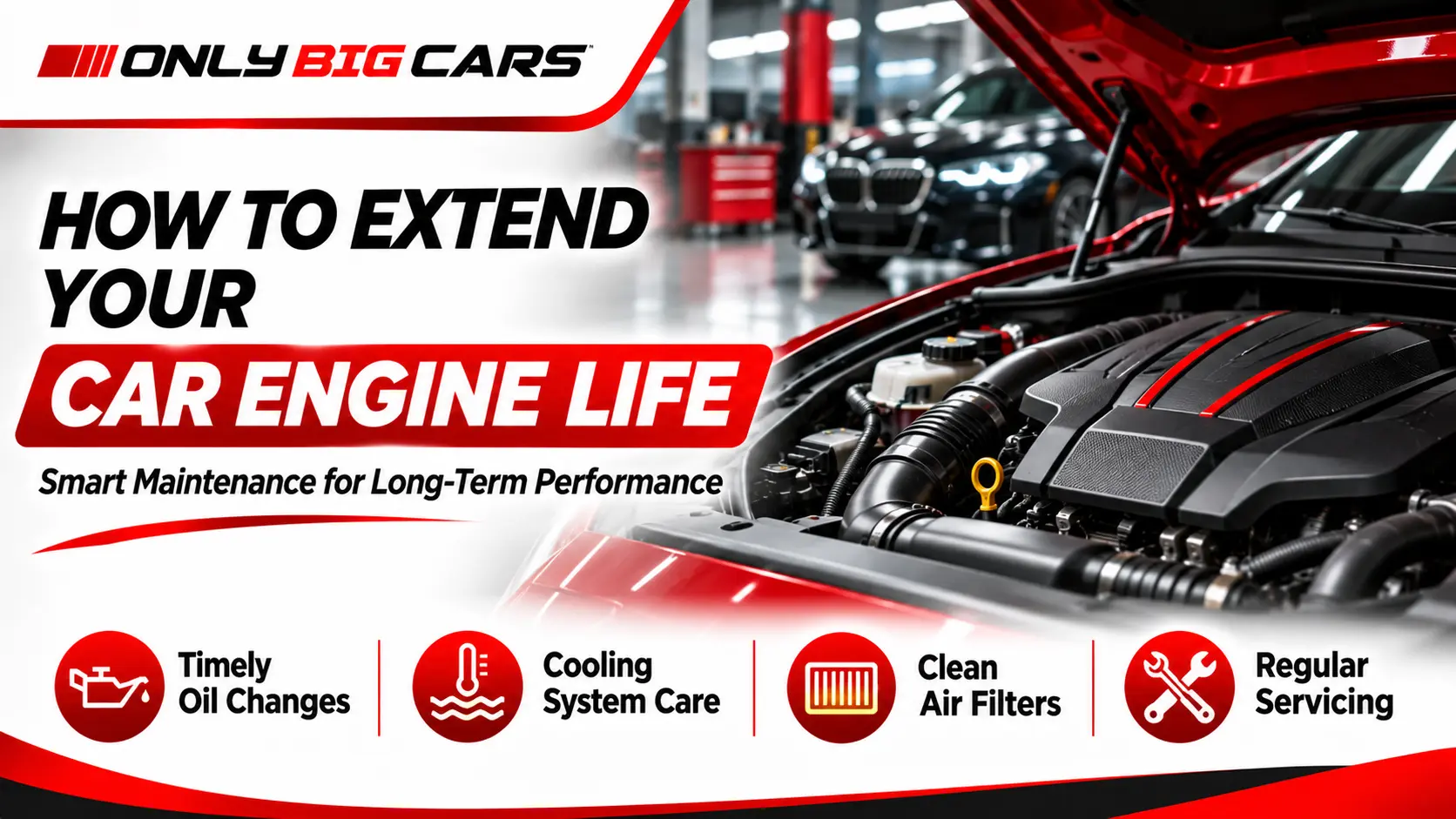
A car engine is one of the most important components of a vehicle. Its condition directly affects performance, reliability, fuel efficiency and the overall driving experience. Although every engine experiences wear over time, the right maintenance practices can help it remain reliable for longer and reduce the chances of expensive repairs.
Many engine problems develop gradually because of neglected servicing, incorrect fluids, overheating or delayed repairs. The good news is that consistent care and responsible driving can help prevent several avoidable issues.
In this guide, onlybigcars explains practical ways to extend your car engine life and keep your vehicle performing reliably.
1. Change Engine Oil at the Recommended Time
Engine oil plays an essential role in protecting internal engine components. It lubricates moving parts, reduces friction, helps manage heat and carries away contaminants.
As engine oil ages, its effectiveness can decrease. Delaying an oil change may allow contaminants to accumulate and increase wear on engine components.
To protect your engine:
- Follow the oil replacement schedule mentioned in your owner's manual.
- Use the recommended oil viscosity and manufacturer specifications.
- Check the oil level periodically as instructed by the manufacturer.
- Get unusual oil consumption or leakage inspected.
- Avoid extending oil-change intervals without checking the manufacturer's guidance.
Regular Engine oil service can help maintain proper lubrication and support long-term engine health.
2. Replace the Engine Oil Filter Regularly
The oil filter removes dirt, metal particles and other contaminants from engine oil. Over time, the filter collects debris and may become less effective.
Skipping an oil filter replacement when it is due can affect the cleanliness of the lubrication system.
A few important practices include:
- Replace the oil filter according to the manufacturer's service schedule.
- Use a filter that meets the vehicle's specifications.
- Check for oil leaks around the filter after servicing.
- Ask the technician to confirm that the correct filter has been fitted.
Timely Engine oil filter replacement is an important part of maintaining a healthy lubrication system.
3. Keep the Cooling System in Good Condition
An engine generates considerable heat while operating. The cooling system helps maintain its operating temperature and prevents overheating.
Low coolant levels, leaks, damaged hoses or cooling-system faults can cause the engine temperature to rise beyond its normal range.
To maintain the cooling system:
- Check the coolant reservoir according to the owner's manual.
- Use the coolant type recommended for your vehicle.
- Look for visible signs of coolant leakage.
- Have radiator hoses, the radiator and related components inspected.
- Get unusual temperature changes checked promptly.
Never open a radiator or coolant cap while the engine is hot. If the temperature warning appears, stop safely and follow the vehicle manufacturer's instructions.
Professional Car coolant service can help identify cooling system problems before they lead to serious engine damage.
4. Replace the Engine Air Filter When Required
The engine air filter prevents dust and other particles from entering the engine through the intake system. A dirty or clogged filter can restrict airflow and affect engine performance.
Driving in dusty environments may cause the filter to collect dirt more quickly.
Keep these points in mind:
- Inspect the air filter at the recommended service intervals.
- Replace it when required by the manufacturer.
- Use a filter compatible with your vehicle.
- Do not ignore reduced performance or unusual engine behaviour.
Timely Engine air filter replacement helps maintain proper airflow and supports efficient engine operation.
5. Avoid Aggressive Driving Habits
Driving behaviour can influence engine wear over time. Frequent hard acceleration, unnecessary high engine speeds and abrupt changes in driving conditions can place additional stress on vehicle components.
Develop smoother driving habits:
- Accelerate progressively instead of pressing the accelerator suddenly.
- Avoid unnecessary high engine speeds.
- Use the appropriate gear for your speed and road conditions.
- Avoid prolonged idling when it is unnecessary.
- Allow the engine to operate normally without repeatedly revving it.
Smooth driving can help reduce unnecessary mechanical stress and support better vehicle efficiency.
6. Do Not Ignore Engine Warning Lights
Dashboard warning lights are designed to alert drivers when a vehicle system needs attention. Ignoring an engine related warning may allow a small issue to become more serious.
Pay attention to:
- Check engine warning lights.
- Engine temperature warnings.
- Oil pressure warnings.
- Unusual engine noises or vibrations.
- Unexpected changes in engine performance.
An oil pressure warning or overheating warning requires prompt attention. Stop safely and follow the instructions in your owner's manual. Do not continue driving if doing so could cause further damage.
A professional diagnostic inspection can help identify the underlying issue instead of relying on guesswork.
7. Maintain Spark Plugs and Ignition Components
Spark plugs play an important role in petrol engine combustion. Worn or faulty spark plugs and ignition components may cause rough idling, misfires, starting difficulties or reduced performance.
To maintain the ignition system:
- Follow the manufacturer's spark plug replacement schedule.
- Get repeated engine misfires inspected.
- Check ignition coils if diagnostic results indicate a problem.
- Use compatible replacement components.
For petrol vehicles, timely spark plug maintenance can support smooth engine operation. Diesel engines use a different ignition system, so their maintenance requirements are not the same.
8. Check Belts, Hoses and Engine Components
Belts and hoses support several important engine functions. Depending on the vehicle, belts may operate components such as the alternator, water pump or other accessories. Timing belts, where fitted, are particularly important to engine operation.
Cracked hoses, worn belts or loose connections should not be ignored.
During scheduled servicing, ask the technician to inspect:
- Drive belts and belt tension.
- Timing belt or timing chain components, as applicable.
- Coolant hoses and connections.
- Signs of oil or coolant leakage.
- Engine mounts and related components.
Follow the manufacturer's replacement schedule for timing-related components. Do not assume every vehicle has the same belt or chain maintenance requirements.
9. Use the Correct Fuel and Manufacturer-Recommended Fluids
Using suitable fuel and fluids helps the engine operate according to its design specifications.
Always follow the manufacturer's recommendations for:
- Fuel grade and type.
- Engine oil viscosity and specification.
- Coolant type.
- Other vehicle specific fluids and lubricants.
Avoid choosing products only because they are advertised as premium or suitable for every vehicle. Compatibility with your particular engine is more important.
10. Follow a Regular Engine Service Schedule
Regular servicing helps identify developing problems and keeps important engine components in good condition.
A professional inspection may include checks of the lubrication system, cooling system, air intake, ignition components, belts, hoses and diagnostic information.
The exact service requirements depend on the vehicle's make, model, engine, age, mileage and driving conditions.
A consistent Car preventive maintenance plan can help reduce avoidable wear and identify issues before they become more expensive to repair.
11. Pay Attention to Small Changes in Engine Behaviour
Not every engine problem begins with a dashboard warning. Sometimes, changes in sound, performance or fluid consumption provide an early indication that something needs attention.
Do not ignore:
- Unusual knocking or rattling sounds.
- Repeated rough idling.
- Unexpected loss of engine power.
- Unusual exhaust smoke.
- Frequent coolant or engine oil loss.
- Changes in fuel consumption.
These symptoms can have different causes. A qualified technician should inspect the vehicle and identify the actual problem before parts are replaced.
Common Mistakes That Can Shorten Engine Life
Some everyday maintenance mistakes can increase the risk of engine problems.
|
Common mistake |
Why it matters |
|
Delaying oil changes |
Can reduce lubrication effectiveness and increase wear |
|
Using incorrect engine oil |
May affect lubrication and engine protection |
|
Ignoring coolant leaks |
Can lead to overheating |
|
Skipping air filter replacement |
Can restrict airflow |
|
Ignoring warning lights |
May allow an existing fault to become worse |
|
Delaying scheduled inspections |
Can leave developing problems undetected |
|
Using unsuitable replacement parts |
May affect compatibility and reliability |
Avoiding these mistakes and following the correct maintenance schedule can support long-term engine health.
Why Professional Car Engine Servicing Matters
Some basic checks can be performed by vehicle owners when they follow the owner's manual and appropriate safety precautions. However, engine diagnostics, cooling-system repairs, oil leakage inspections and component replacement require the right tools and technical knowledge.
A professional Car engine service can help with:
- Engine condition inspections.
- Engine oil and filter servicing.
- Cooling system checks.
- Air filter inspection and replacement.
- Diagnostic scanning.
- Inspection of belts, hoses and related components.
- Identifying unusual engine noises or performance issues.
At OnlyBigCars, car owners can explore professional vehicle maintenance and repair support to help keep their vehicles in good working condition. Always choose servicing based on your vehicle's actual requirements and manufacturer recommendations.
Conclusion
Extending your car engine life is not about relying on one special product or a single maintenance trick. It requires consistent servicing, the correct engine oil and fluids, a healthy cooling system, clean filters and responsible driving habits.
Pay attention to warning signs and avoid postponing necessary inspections. Following your manufacturer's maintenance schedule and addressing problems early can help maintain engine reliability and reduce the risk of avoidable repairs.
For long term engine health, make preventive maintenance a regular part of your car ownership routine with OnlyBigCars.
1. How can I extend the life of my car engine?
Follow the manufacturer's service schedule, change engine oil on time, maintain the cooling system, replace filters when required and practise smooth driving habits.
2. How often should I change engine oil to protect my engine?
Follow the oil change interval specified in your owner's manual. The correct interval depends on the vehicle, engine type, oil specification and driving conditions.
3. Does regular servicing help an engine last longer?
Yes. Regular servicing helps maintain lubrication, cooling, filtration and other important systems while allowing developing issues to be identified earlier.
4. Can low coolant damage a car engine?
Yes. Low coolant levels or cooling-system faults can cause overheating, which may lead to serious engine damage if not addressed promptly.
5. Does aggressive driving affect engine life?
Frequent hard acceleration and unnecessary high engine speeds can increase mechanical stress. Smooth and responsible driving helps reduce unnecessary strain.
6. What are the signs that my car engine needs inspection?
Unusual engine noises, warning lights, overheating, rough idling, unexpected power loss, unusual exhaust smoke and repeated fluid loss are reasons to arrange a professional inspection.