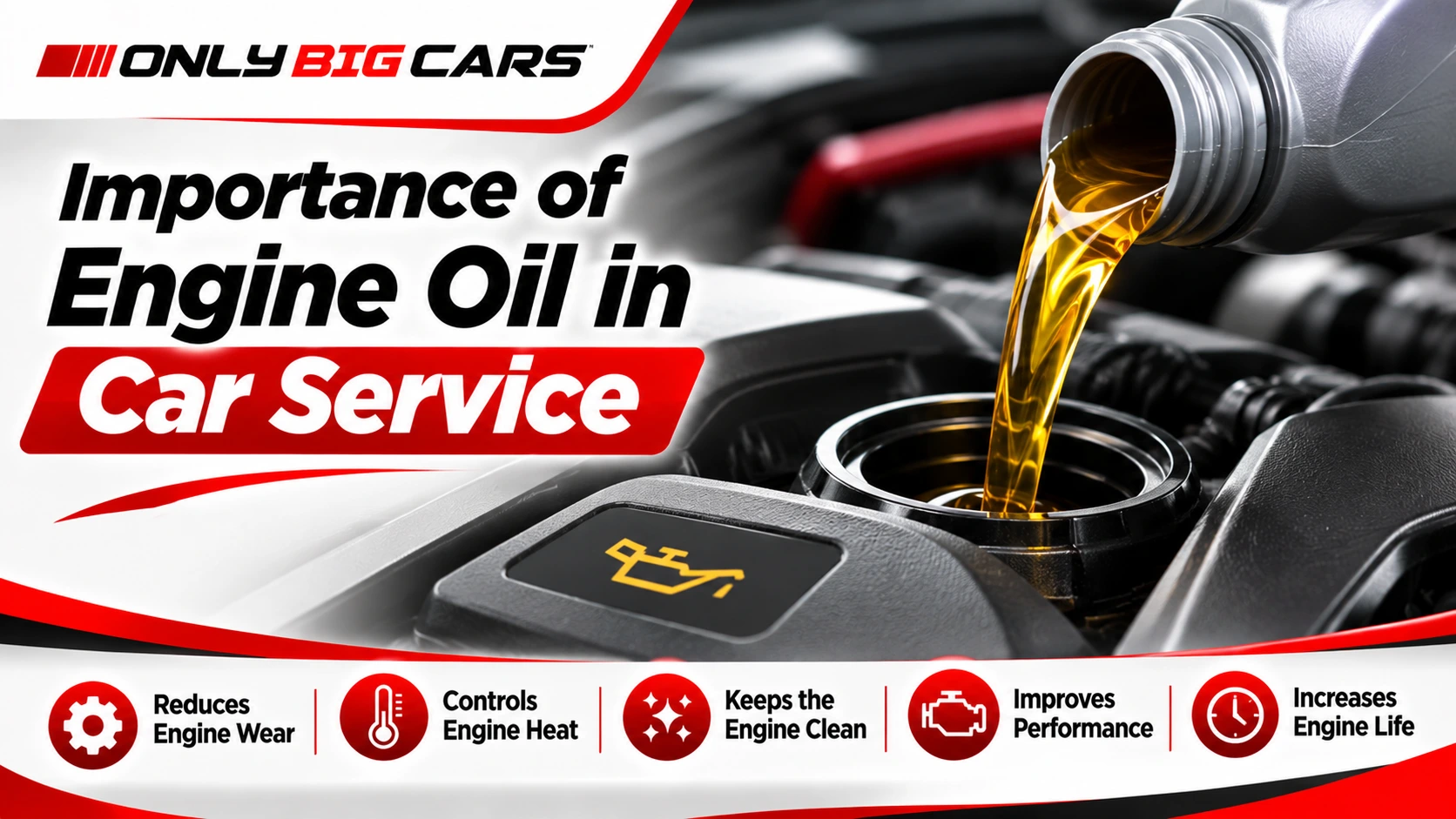
Engine oil is one of the most important fluids in your vehicle. It helps protect internal engine components, reduces friction, supports temperature control and keeps the engine operating smoothly. Without suitable engine oil and timely maintenance, everyday driving can gradually increase engine wear and affect vehicle performance.
During routine car servicing, checking the engine oil level, inspecting its condition and replacing it when required are essential maintenance steps. The correct oil and a good quality oil filter also play an important role in protecting the engine.
In this guide, we explain the importance of engine oil in car service, how it works, when it should be replaced and why professional maintenance matters.
1. Reduces Friction Between Engine Components
An engine contains several moving components that operate at high speeds. These parts need proper lubrication to reduce direct metal-to-metal contact.
Engine oil forms a protective lubricating film between moving components. This helps reduce friction and unnecessary wear during engine operation.
When engine oil becomes degraded or its level drops too low, its ability to protect these components can be affected. Regular oil checks and timely replacement help maintain proper lubrication.
2. Helps Control Engine Temperature
An engine produces considerable heat while running. Although the cooling system manages much of this heat, engine oil also helps carry heat away from certain internal components.
As oil circulates through the engine, it absorbs and transfers some of the heat generated during operation.
Old, unsuitable or insufficient oil may not provide the intended protection. This is why engine oil condition and level should be checked as part of regular car maintenance.
3. Keeps the Engine Clean
Engine oil does more than lubricate. It also helps carry small contaminants and deposits towards the oil filter, where many of these particles are captured.
Over time, oil can collect dirt, combustion-related contaminants and other unwanted particles. Its cleaning and protective properties can gradually reduce as it ages.
Replacing the oil and filter according to the manufacturer's recommended schedule helps maintain cleaner engine operation.
4. Protects Engine Components From Wear
Continuous movement creates friction and stress inside an engine. Proper lubrication helps protect components such as bearings, pistons and other moving parts.
Using the correct engine oil helps maintain the protective oil film required by the engine.
The wrong oil grade or delayed oil changes may reduce the level of protection the manufacturer intended. This is particularly important for vehicles with modern engines and specific lubrication requirements.
5. Supports Smooth Engine Performance
Engine oil helps internal components move with less friction. Proper lubrication supports smooth engine operation and helps maintain consistent performance.
If oil becomes excessively old, contaminated or insufficient, the engine may experience increased friction and noise.
However, engine noise or reduced performance can have several causes. An oil check is a useful first step, but persistent symptoms should be inspected by a qualified mechanic.
6. Why the Correct Engine Oil Matters
Not every engine uses the same type of oil. Different vehicles have different lubrication requirements depending on their engine design and manufacturer specifications.
Before selecting engine oil, consider:
- Viscosity grade: This indicates how the oil flows under specified temperature conditions.
- Manufacturer specifications: The oil must meet the approval or performance standards required for your vehicle.
- Engine type: Petrol, diesel, turbocharged and other engine designs may have different requirements.
- Driving conditions: Frequent short trips, heavy traffic and demanding operating conditions may affect maintenance requirements.
Always check your owner's manual or the manufacturer's service information before selecting engine oil. Choosing oil only because it is popular or inexpensive may not be suitable for your vehicle.
7. Importance of Engine Oil Filter Replacement
The engine oil filter helps remove contaminants from circulating oil. It captures particles that could otherwise contribute to wear inside the engine.
As the filter collects contaminants, it gradually becomes loaded with debris. A neglected or unsuitable filter may affect the lubrication system's intended operation.
During an engine oil filter replacement, the technician should use a filter that matches the vehicle's requirements.
Replacing the filter along with engine oil, whenever specified by the manufacturer's service schedule, helps maintain the effectiveness of the lubrication system.
8. When Should You Change Engine Oil?
There is no single oil-change interval that applies to every car. The correct timing depends on the vehicle manufacturer's recommendations, engine type, oil specification, driving conditions and service schedule.
You should consider an engine oil check or professional inspection if:
- Your vehicle is approaching its scheduled service.
- The oil level is below the recommended range.
- The oil change reminder or service warning appears.
- You notice unusual engine noise.
- You find signs of an oil leak.
- The vehicle has been used under demanding driving conditions.
Do not rely only on oil colour to decide whether an oil change is necessary. Follow the manufacturer's recommended schedule and have the vehicle inspected if you notice any unusual symptoms.
9. Warning Signs That Your Car May Need an Oil Check
Pay attention to changes in your vehicle that could indicate an engine lubrication issue.
Oil warning light: If the oil pressure warning light appears, stop driving as soon as it is safe to do so and follow the owner's manual instructions. Low oil pressure can cause serious engine damage.
Unusual engine noise: New knocking, tapping or other abnormal sounds should be checked by a professional.
Visible oil leakage: Oil spots under the vehicle or visible leakage around engine components require inspection.
Low oil level: A level below the recommended range needs attention. Repeated oil loss should be investigated rather than simply topping up each time.
Burning oil smell: This may indicate an oil leak or oil contacting a hot surface. Arrange a professional inspection.
These signs do not always mean that the engine oil itself is the only problem. Accurate diagnosis is important before deciding on a repair.
10. Why Engine Oil Service Should Be Part of Regular Car Maintenance
Engine oil maintenance is an essential part of car periodic maintenance service. A proper service involves more than simply draining old oil and adding new oil.
A professional inspection may include:
- Checking the engine oil level and condition.
- Confirming the correct oil grade and specification.
- Inspecting for visible leaks.
- Replacing the oil filter when required.
- Checking the drain plug and sealing components.
- Resetting the service reminder, where applicable.
- Recording the service details for future maintenance.
Regular servicing also gives technicians an opportunity to identify other maintenance concerns before they become more serious.
If you are looking for an engine oil service, choose a workshop that follows your vehicle manufacturer's requirements and explains the oil and filter specifications being used.
11. Common Engine Oil Maintenance Mistakes to Avoid
Some maintenance mistakes can reduce the protection your engine receives.
- Ignoring the service schedule: Delaying oil changes beyond the recommended interval can affect lubrication and engine protection.
- Using the wrong oil grade: Oil that does not meet the required specifications may not provide the intended performance.
- Overfilling the engine: Excessive oil can create operating problems. Maintain the level within the manufacturer's recommended range.
- Ignoring oil leaks: A small leak should not be overlooked because continued oil loss can reduce the available lubrication.
- Skipping filter replacement: Follow the manufacturer's instructions for oil filter replacement.
- Choosing oil without checking specifications: Price and brand alone do not determine whether an oil is suitable for your engine.
Avoiding these mistakes helps support effective car preventive maintenance.
12. How OnlyBigCars Can Help With Engine Oil Maintenance
Regular engine oil maintenance is an important part of keeping a vehicle in good operating condition. The right oil, a suitable filter and timely inspections all contribute to engine protection.
onlybigcars helps car owners understand the importance of professional vehicle maintenance and the need to follow manufacturer-recommended service requirements.
Whether your car needs a routine oil inspection, an oil change or a broader maintenance check, choose a workshop that uses the correct specifications for your vehicle and communicates the work clearly.
Conclusion
Engine oil plays a major role in protecting your car's engine. It reduces friction, helps manage heat, carries contaminants towards the oil filter and supports smooth engine operation.
However, using the correct oil and replacing it at the recommended time are just as important as checking the oil level. Make engine oil inspection and filter maintenance part of your regular car servicing routine.
For dependable vehicle care, follow your manufacturer's maintenance schedule and consult a qualified technician whenever you notice an oil-related warning or unusual engine behaviour.
1. Why is engine oil important in car servicing?
Engine oil lubricates moving engine components, reduces friction, helps transfer heat and carries contaminants towards the oil filter. It is essential for protecting the engine during operation.
2. How often should engine oil be changed?
The oil-change interval depends on the vehicle manufacturer's recommendations, engine type, oil specification and driving conditions. Always follow the schedule provided in your owner's manual.
3. What happens if I do not change engine oil on time?
Old or degraded engine oil may lose some of its protective properties. This can increase friction, deposits and engine wear, potentially leading to expensive repairs.
4. Why should the engine oil filter be replaced?
The oil filter captures contaminants from circulating engine oil. Replacing it according to the manufacturer's schedule helps maintain effective filtration and lubrication.
5. Can I use any engine oil in my car?
No. Every engine has specific oil viscosity and performance requirements. Always select engine oil that meets the specifications recommended by your vehicle manufacturer.
6. What are the signs that my car needs an engine oil check?
An oil warning light, low oil level, visible leakage, unusual engine noise or a burning oil smell may indicate a problem. Have the vehicle inspected by a qualified mechanic, especially if an oil pressure warning appears.