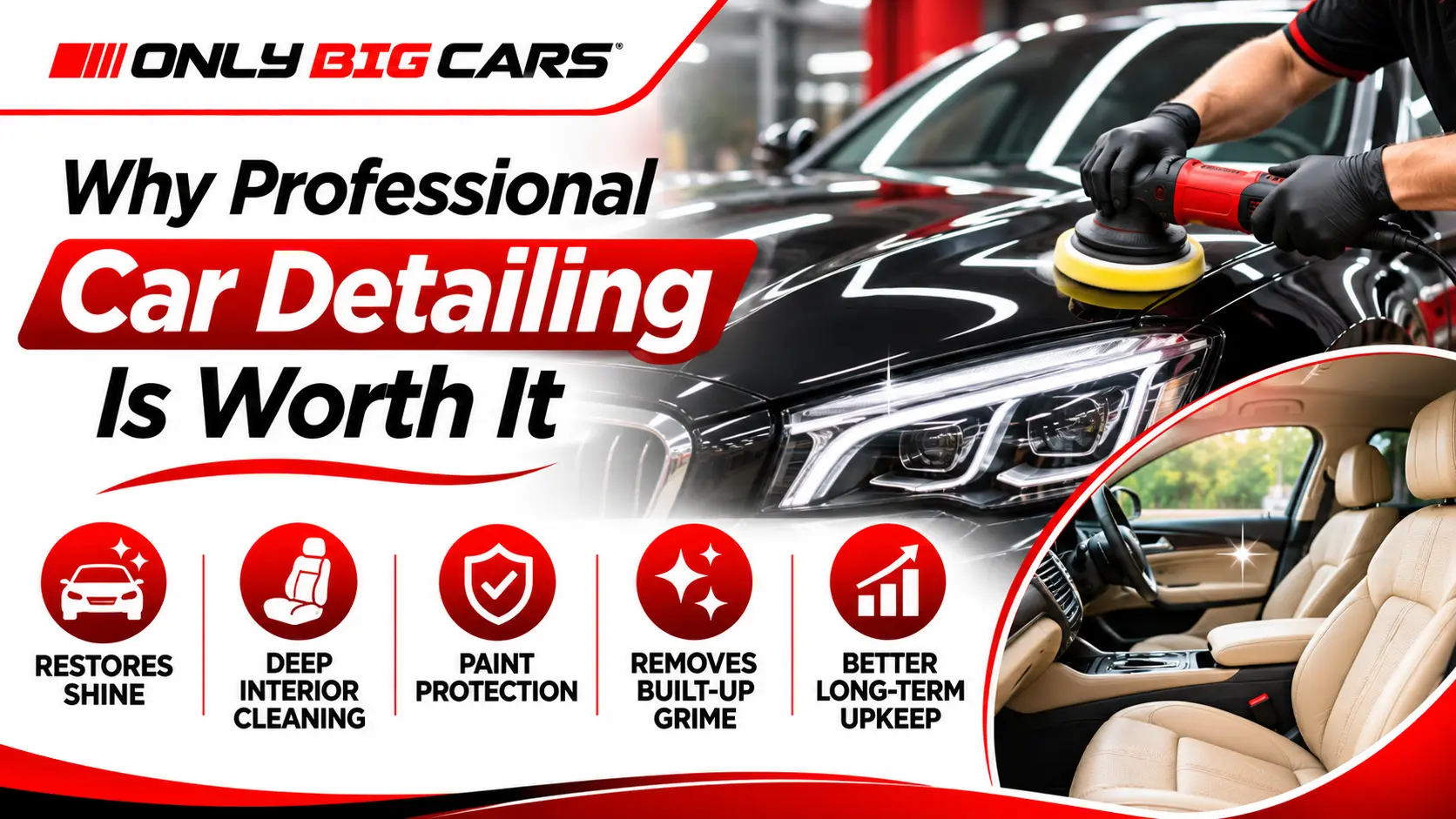
Your car is exposed to dust, road grime, sunlight, rain, food spills and everyday use. Over time, these factors can affect its appearance and make the interior and exterior harder to maintain with routine cleaning alone.
A regular car wash is useful for removing everyday dirt, but it does not always address accumulated grime, interior stains, paint contamination or neglected surfaces. This is where professional car detailing can make a difference.
Onlybigcars professional detailing involves a more thorough approach to cleaning and caring for a vehicle's interior and exterior. Depending on the selected package, it may include deep cleaning, paint polishing, upholstery care and suitable surface protection.
But is it really worth the investment?
For many car owners, the answer depends on the vehicle's condition, usage, expectations and the services included. Here is what you should know before booking professional detailing.
1. It Goes Beyond a Regular Car Wash
A regular car wash mainly focuses on removing visible dirt from the vehicle's exterior. Professional detailing takes a more focused approach to different surfaces and areas.
A detailing package may include:
- Thorough exterior washing.
- Cleaning of difficult-to-reach areas.
- Paint surface preparation.
- Interior vacuuming and cleaning.
- Upholstery and carpet care.
- Wheel and tyre cleaning.
- Glass and trim cleaning.
- Suitable surface protection.
The exact work depends on the vehicle's condition and the package selected. This additional attention is one of the main reasons car owners consider professional detailing.
2. It Helps Maintain Your Car's Appearance
A vehicle's appearance can gradually change due to accumulated dirt, water spots, road grime and environmental exposure.
Professional exterior detailing focuses on cleaning the vehicle's surfaces and improving their overall presentation.
Depending on the paint condition, the process may include:
- Careful pre-washing and exterior cleaning.
- Removal of suitable surface contaminants.
- Cleaning around badges, trims and exterior details.
- Paint polishing where appropriate.
- Application of a suitable protective product.
These steps can help restore a cleaner and more consistent appearance. However, detailing cannot reverse every type of paint damage, and deep scratches or damaged paint may need separate repair work.
3. Professional Paint Care Requires the Right Approach
Your car's paintwork is exposed to many environmental and everyday factors. Incorrect cleaning techniques or unsuitable products may cause additional surface marks.
Professional detailing can help when the paint needs more attention than routine washing provides.
A suitable paint-care process may involve:
Surface inspection: The paint is examined to understand its condition and identify visible imperfections.
Cleaning and preparation: Dirt and suitable surface contaminants are removed before polishing or protection.
Polishing: Depending on the paint condition, a suitable polishing process may improve gloss and reduce the appearance of certain minor imperfections.
Protection: A compatible wax, sealant or coating may be applied if included in the selected service.
Not every car needs machine polishing or paint correction. The process should be selected according to the paint condition and the vehicle manufacturer's recommendations.
4. It Gives Your Car's Interior More Attention
The cabin collects dust, food particles, everyday spills and residue from regular use. These areas can be difficult to clean properly with a quick wipe.
Professional interior detailing may include:
- Vacuuming seats, carpets and floor mats.
- Cleaning dashboard and door panels.
- Treating suitable fabric or leather surfaces.
- Cleaning cup holders and storage compartments.
- Removing dirt from accessible gaps and corners.
- Cleaning interior glass.
Different materials need different cleaning methods. Leather, fabric, synthetic materials and electronic surfaces should not all be treated with the same product.
If your vehicle's cabin needs deeper cleaning, exploring interior detailing can help you compare suitable professional options.
5. It Helps Address Areas That Routine Cleaning Misses
Some parts of a vehicle receive less attention during everyday cleaning.
For example:
- Wheel faces and accessible wheel areas.
- Door jambs and exterior edges.
- Areas around badges and trim.
- Seat seams and carpet edges.
- Boot mats and storage compartments.
- Interior corners and hard-to-reach surfaces.
A professional detailer can give these areas more attention using suitable brushes, cloths and cleaning products.
This does not mean every detailing package includes every area. Ask for a clear list of inclusions before booking.
6. It Can Help You Make Better Decisions About Paint Protection
After cleaning and preparing the paint, a detailing professional may recommend a suitable protection option.
Common choices include:
Car wax: A surface product that can add gloss and provide temporary protection. Its durability depends on the product and maintenance.
Paint sealant: A synthetic product designed to provide surface protection for a product-dependent period.
Ceramic coating: A specialised coating that can provide a durable protective layer when correctly prepared and applied. Its performance and maintenance requirements vary by product.
Paint Protection Film (PPF): A physical film applied to selected painted areas to help protect against certain types of surface damage.
These options are not interchangeable. The right choice depends on your budget, vehicle usage, paint condition and maintenance expectations. A professional should explain the limitations and care requirements before recommending a product.
7. It Can Be Useful for Cars That Are Used Frequently
A vehicle driven regularly may accumulate dirt and interior residue faster than one that is used occasionally.
Professional detailing may be worth considering when:
- You commute frequently.
- Your car is regularly parked outdoors.
- You travel with children or pets.
- The cabin has accumulated stains or dirt.
- The exterior has lost some of its clean appearance.
- You are preparing the vehicle for a special occasion.
However, frequent detailing is not automatically necessary. A suitable maintenance routine between detailing appointments can help keep the vehicle in good condition.
8. It Can Improve the Presentation of a Used Car
If you plan to sell your vehicle, its overall presentation may influence a buyer's first impression.
A clean cabin, properly maintained exterior and presentable paintwork can make the vehicle easier to inspect.
Professional detailing may help with:
- Removing everyday dirt from the interior.
- Cleaning carpets and upholstery.
- Improving exterior cleanliness.
- Refreshing suitable trim and surfaces.
- Making the vehicle look better maintained.
Detailing does not guarantee a higher resale price. Buyers will also consider the vehicle's age, mileage, mechanical condition, service history and market value.
9. It Helps You Understand Your Vehicle's Cosmetic Condition
During a professional detailing appointment, different exterior and interior surfaces receive closer attention.
This may help identify visible cosmetic concerns such as:
- Paint scratches and swirl marks.
- Stains on upholstery.
- Damaged interior trim.
- Water spots.
- Deteriorating surface finishes.
A detailer can explain which issues may improve through cleaning or polishing and which require a separate repair.
Remember that detailing is primarily a cleaning and cosmetic-care service. It is not a substitute for mechanical inspection, servicing or body repair.
10. How to Decide Whether Professional Car Detailing Is Worth the Cost
Before choosing a package, consider what your car actually needs.
Ask yourself:
- Does the exterior need more than a regular wash?
- Are there interior stains or accumulated dirt?
- Does the paint need polishing or simply cleaning?
- Is surface protection important for your usage?
- Are the proposed services relevant to your vehicle's condition?
Compare the package inclusions instead of choosing only by the lowest price.
A basic cleaning package may be enough for a well-maintained vehicle. A car with neglected upholstery, paint contamination or visible surface imperfections may benefit from a more comprehensive treatment.
For car owners comparing a car detailing service, it is useful to request a clear estimate and understand what work will actually be performed.
11. What to Check Before Booking a Professional Detailer
Choosing the right detailing workshop is just as important as selecting the service.
Before booking, check:
Service inclusions: Ask whether the package includes interior cleaning, exterior detailing, polishing or protection.
Products used: Understand which cleaning and protection products will be applied to your vehicle.
Paint inspection: If polishing is proposed, ask whether the paint condition has been assessed first.
Material compatibility: Confirm that products are suitable for your car's leather, fabric, plastic and other surfaces.
Estimated time: Ask how long the service is expected to take.
Pricing transparency: Request a written estimate and confirm whether any additional work will cost extra.
Aftercare guidance: Ask how to maintain the treated surfaces and whether any special precautions are necessary.
A professional workshop should explain the process clearly and avoid promising that every scratch, stain or imperfection can be removed.
12. When Professional Car Detailing May Not Be Necessary
Professional detailing is useful in many situations, but it is not something every car needs frequently.
You may not need a comprehensive package if:
- Your car is already cleaned and maintained regularly.
- There are no significant stains or accumulated dirt.
- You only need a basic exterior wash.
- The proposed services do not address any actual concern.
- The cost is not justified by the vehicle's present condition.
A practical approach is to choose services based on the condition of your car rather than booking the most expensive package by default.
Conclusion
Professional car detailing is worth considering when your vehicle needs more attention than routine washing and cleaning can provide.
From deeper interior care and exterior cleaning to suitable paint polishing and surface protection, the right detailing service can improve your car's appearance and help maintain its presentation.
The key is to choose a package that matches your vehicle's condition, understand what is included and have realistic expectations about the results.
A well-planned detailing service, combined with regular cleaning habits, can help keep your car looking presentable and comfortable for everyday use.
1. Is professional car detailing worth the money?
It can be worth the cost when your car needs deeper interior cleaning, exterior care, paint polishing or suitable surface protection. The value depends on the vehicle's condition and the services included.
2. How is professional car detailing different from a regular car wash?
A regular car wash mainly removes everyday exterior dirt. Professional detailing gives more attention to interior and exterior surfaces and may include upholstery cleaning, paint preparation, polishing and protection.
3. How often should I get my car professionally detailed?
There is no single schedule for every vehicle. Frequency depends on how often you drive, where the car is parked, passenger usage and its overall condition.
4. Does professional detailing remove scratches?
Polishing may improve the appearance of certain minor paint imperfections. Deeper scratches, damaged paint and other defects may require separate professional repair.
5. Does car detailing help maintain resale value?
Detailing can improve the vehicle's presentation and help create a better first impression. However, it does not guarantee a higher resale price, which also depends on mechanical condition, mileage and market demand.
6. What should I check before choosing a car detailing service?
Check the service inclusions, products used, workshop experience, pricing, estimated time and aftercare instructions. Ask for a paint inspection before approving any polishing or correction work.